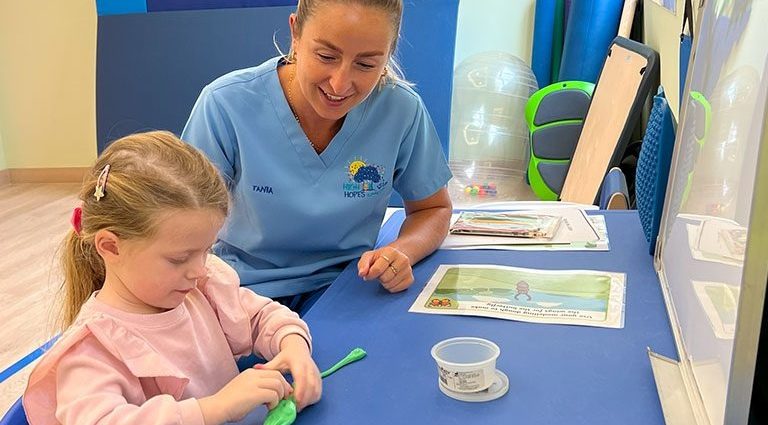
How does a home program support a child’s progress in occupational therapy? A home program includes activities and exercises designed to continue therapy outside of formal sessions. It aims to encourage practice and skill-building in a familiar environment. Creating a simple and clear plan at home allows children to work on specific skills regularly, which supports their overall development.
Set clear and simple goals:
Begin by listing specific goals for the child occupational therapy. These should focus on skills that want practice, such as fine motor tasks like holding a pencil or gross motor tasks like balancing. Goals should be easy to understand and achievable at home, giving the child a clear target to work towards.
Choose activities that fit the goals:
Select activities that fit the goals. For example, if improving hand strength is a goal, squeezing playdough or using clothespins can be useful exercises. Activities should be familiar and enjoyable to encourage participation. Using toys or household items makes the program more practical and fun.
Plan a routine:
Decide on a regular time for the home program. Consistency helps children get used to practicing skills daily or several times a week. Sessions should be short enough to keep the child’s attention but frequent enough to support steady progress. A routine helps both the child and caregivers stay on track.
Provide clear instructions:
Instructions for each activity should be simple and direct. Writing down steps or demonstrating how to do the task helps caregivers assist the child properly. Using pictures or videos can also make instructions easier to follow, especially for younger children.
Monitor progress:
Keep a record of how the child completes activities. Note any improvements or difficulties. This record provides useful information to share with the occupational therapist during follow-up sessions. It also helps adjust the home program as necessary.
Encourage positive feedback:
Give the child praise and encouragement during and after activities. Positive feedback motivates children and builds their confidence. Celebrating small achievements keeps the child engaged and willing to try new tasks.
Collaborate with the therapist:
Stay in touch with the occupational therapist for advice and updates. Therapists can suggest new activities, modify goals, or provide tips to improve the home program. Regular communication supports the overall success of therapy.